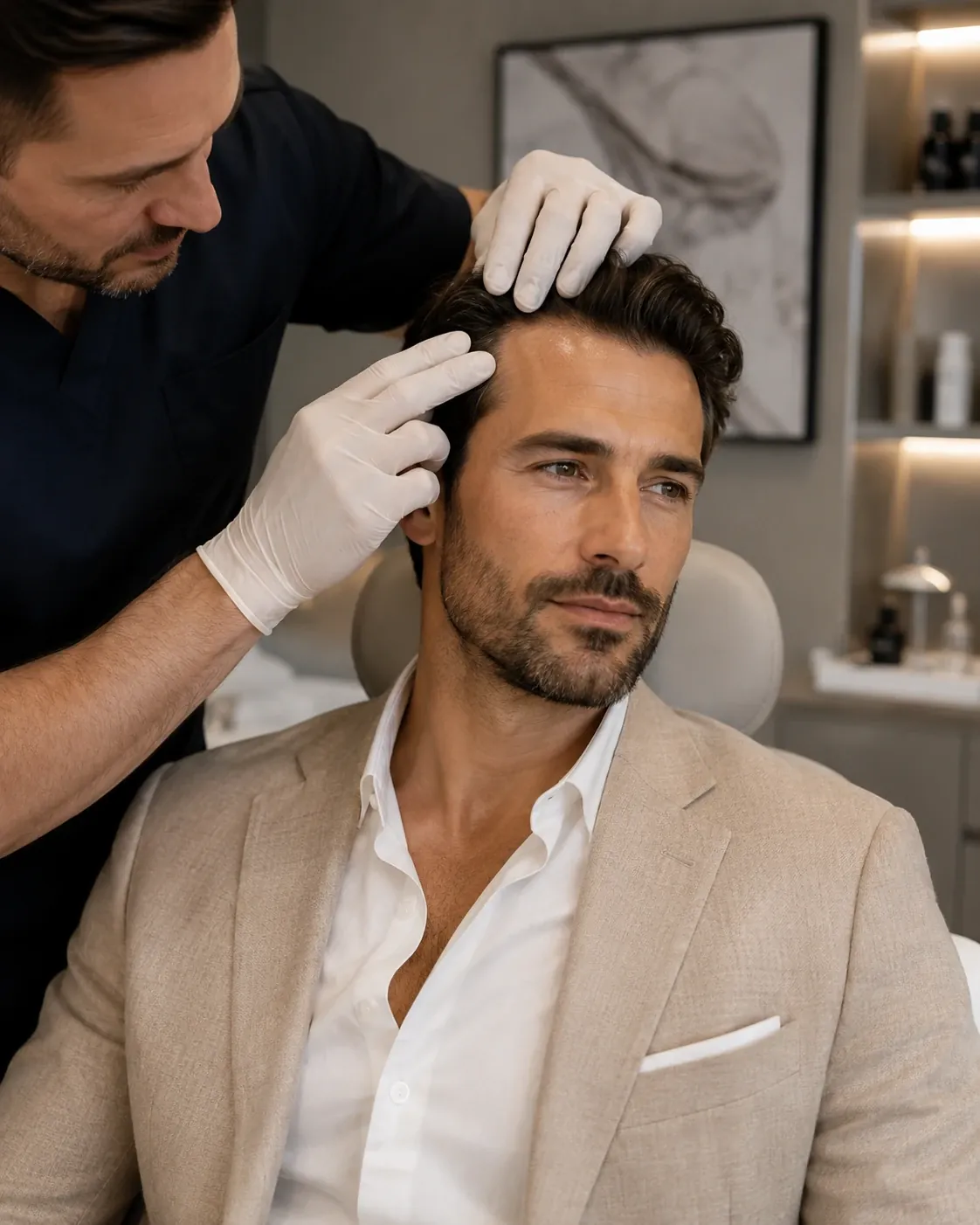
How do I know if my thinning follows male pattern hair loss?
Men’s Hair Restoration is considered for Receding hairline, Crown thinning, Diffuse miniaturization, Early male pattern hair loss, Loss of density. Examination confirms whether the concern comes from a mechanism this treatment can realistically change.
Why does follicle miniaturization matter when planning treatment?
Male pattern hair loss is driven mainly by androgen-sensitive follicle miniaturization, but other causes of shedding can coexist. Medical management targets the underlying biology, while procedures such as PRP or device treatments are supportive options for viable follicles rather than substitutes for diagnosis.
When can I realistically expect a change in density?
Several months. The result should be judged on the biological timeline of Men’s Hair Restoration, not from immediate post-treatment swelling, redness or short-term fluctuation.
Why is long-term treatment usually part of male hair-loss care?
Ongoing treatment commonly required. Hair outcomes evolve over months and depend on diagnosis, ongoing miniaturization, medical factors and follicle viability.
How is the treatment course adjusted as hair loss progresses?
Long-term strategy. The course is planned over months and adjusted according to photographs, scalp findings and response rather than a fixed package.
Can PRP, laser or mesotherapy be combined for male-pattern thinning?
Some patients benefit from combining Men’s Hair Restoration with treatments that address a different layer. Depending on the concern, Dr. Nivine may consider FoLix, PRP for Hair, Hair Mesotherapy. Dr. Nivine combines treatments only when the reason for each step is clinically clear.