Correcting Previous Treatment
A significant share of consultations here are corrections. It is approached as an assessment problem, not as a judgement on whoever treated you before.
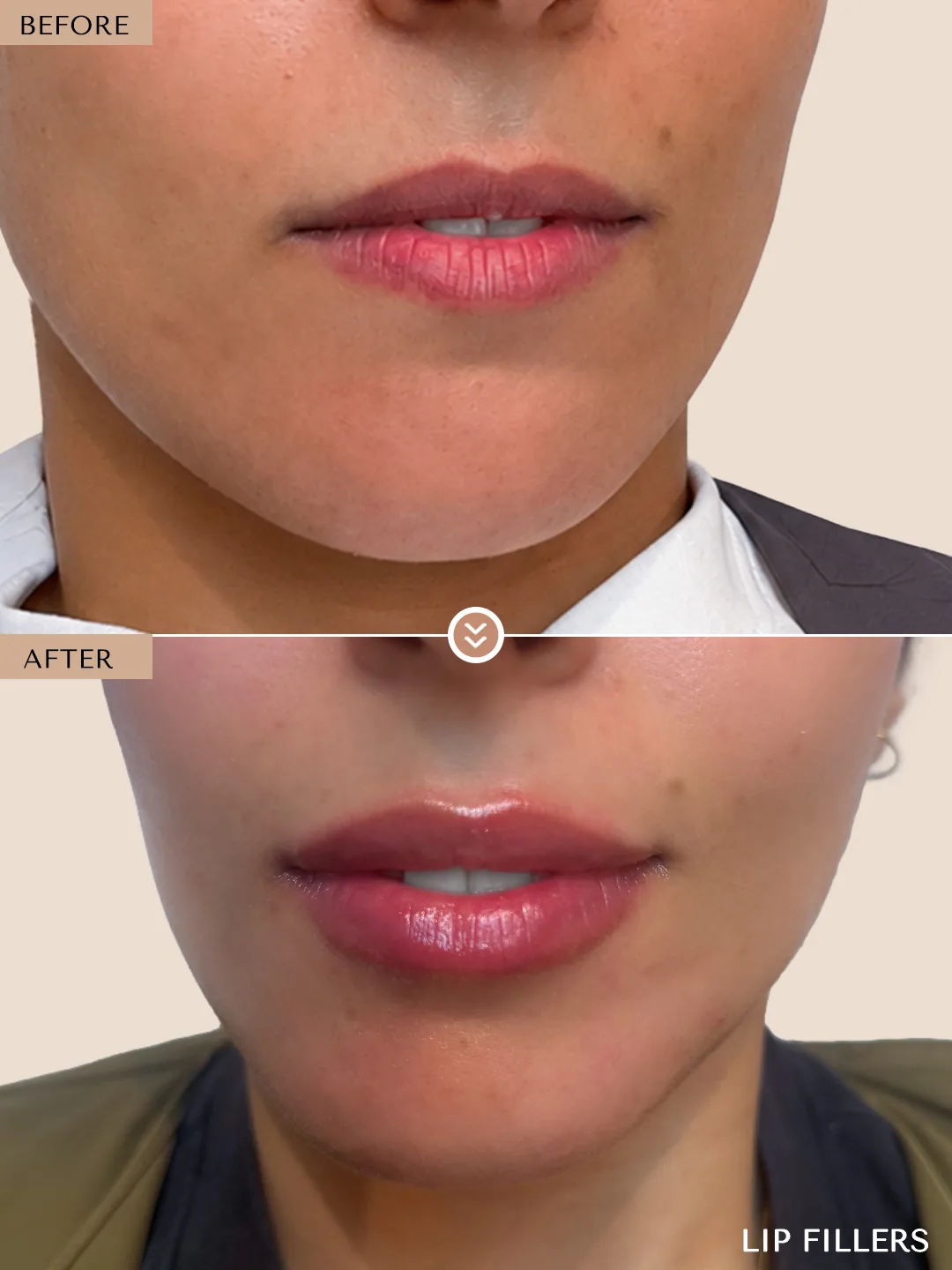
What usually brings people in
Filler that has moved from where it was placed. Asymmetry that did not settle. A lip that projects forward of the face. A mid-face that looks fuller than it should from the front and heavier from the side. Or simply a face that has been treated repeatedly and now looks subtly unlike itself without any single treatment being identifiable as the cause.
Assessment comes first, always
- What appears to be present, where it sits, and in which plane
- How long ago it was placed, if known
- Whether the appearance is product, swelling, tissue change or underlying structure
- Whether the original plan was wrong or the placement was
- Whether anything needs to be removed at all
Not everything should be dissolved. Some of it is doing useful work.
Why dissolving is not automatic
Dissolving agents are not selective. They act on hyaluronic acid filler in the area, including product that is placed correctly and supporting the face. Dissolving everything to fix one region frequently produces a face that looks older and flatter than it did before, and then needs rebuilding from a worse starting point.
Where dissolving is appropriate, it is often done partially and in stages, with time in between to assess what the face actually looks like underneath.
Waiting as a treatment decision
Where treatment is recent, the correct first step is frequently to wait. Product is still settling for two weeks and continues to integrate for longer. Intervening early risks correcting something that would have resolved.
Rebuilding
Once the picture is clear, rebuilding follows the same sequence as any plan: structure first, in stages, with reviews between. Corrections are usually slower than first-time treatment, because there is more to assess between each stage.
If you do not know what was placed
That is extremely common and it does not prevent assessment. Bring whatever you have. Where records are unavailable, assessment proceeds on what can be seen and felt, and the plan is built more conservatively as a result.
Assessment, not dissolving
Often partial and staged
Waiting is frequently correct
Helpful, not required
Before you book.
Do I need to know what filler I had?
It helps, but it is not required. Many patients do not know. Assessment proceeds on examination and the plan is built more cautiously where the history is unclear.
Will everything have to be dissolved?
Usually not. Dissolving is not selective, and removing product that is doing useful work often makes the face look worse. Where it is needed it is frequently partial and staged.
How long after dissolving can I be treated again?
There is a settling period before the face can be assessed honestly. The interval is decided at assessment rather than fixed in advance.
Is this a judgement on my previous doctor?
No. Anatomy varies, products behave differently in different tissue, and plans that were reasonable can still age poorly. The consultation is about what to do now.
Can migrated filler be fully removed?
Often substantially, though not always completely, and it can require more than one session. What is realistic for your case is discussed at assessment.