How lip ratio changes the way a face reads
Why upper-to-lower proportion matters more than millilitres — and why the mouths that look treated are usually not the ones that had the most product.
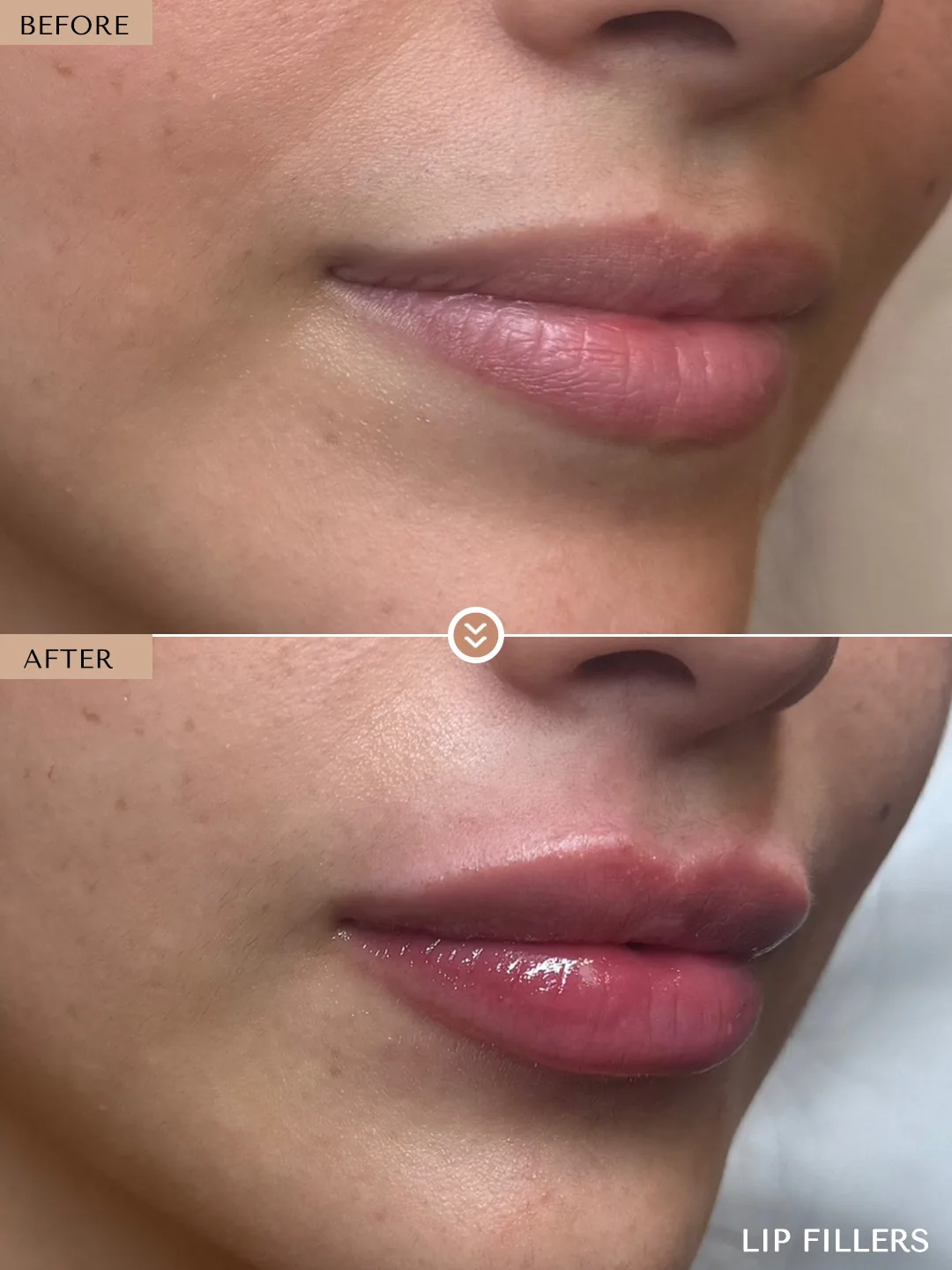
Patients almost never arrive asking about ratio. They arrive with a number in mind — one syringe, half a syringe, whatever a friend had — and a photograph of someone else’s mouth. The number is the wrong unit of measurement, and the photograph is usually of a face built differently from theirs.
What the eye is actually reading
When you look at a mouth, you are not assessing its size. You are assessing a set of relationships: how much upper lip there is compared with lower, where the peaks of the cupid’s bow sit, how far the lip projects compared with the chin and the tip of the nose, and how much tooth shows when the face is at rest.
The proportion most faces are read against is roughly one to one point six, upper to lower. It is not a rule to be applied mechanically — plenty of beautiful mouths sit outside it — but it explains why a lip can be small and still look right, and why a lip can be generously filled and still look wrong.
The mouths that look treated are rarely the ones with the most product. They are the ones with the wrong proportion.
The most common error
The upper lip receives too much. It is the intuitive place to put product, because it is the part patients look at, and because a fuller upper lip photographs well from the front. But the upper lip is the smaller half of the proportion. Adding volume there first inverts the ratio, and the mouth begins to sit forward of the face.
The correction, in a surprising number of cases, is to treat the lower lip — or to leave the lip alone entirely and address the chin. A recessed chin makes any lip look heavy. Filling the lip in that situation makes the recession more obvious, and patients then return asking why the result looks unbalanced.
Why profile assessment is not optional
A mouth that is balanced from the front can project incorrectly from the side. The front view tells you about width and volume. The profile tells you about projection, which is the dimension patients notice in mirrors and photographs of themselves that they did not pose for.
Photographs are taken in both views before treatment and again at the two-week review. Not for marketing — for measurement. Memory is unreliable about faces, including your own.
What this means for a first appointment
Expect the consultation to spend more time on assessment than most patients are used to, and expect the plan to involve less product in the first session than you anticipated. Proportion can only be judged after swelling resolves, which is why the work is staged with a review in between.
It also means expect the possibility of being told that filler is not the answer. That is not a soft decline. It is the assessment reaching a conclusion, and it happens often enough here that it should be said in advance.
Before you book.
Is there an ideal lip ratio?
Roughly one to one point six, upper to lower, is what most faces are read against. It is a reference point rather than a rule, and plenty of balanced mouths sit outside it.
Can a bad ratio be corrected?
Usually. The first step is assessing what is already present and where it sits. Sometimes the correction is dissolving part of it before rebuilding.