Recovery and aftercare
Recovery after lip enhancement depends on the amount and placement of filler. Temporary swelling, tenderness and bruising are common, and the true proportion is judged after swelling has settled.
Dubai, United Arab Emirates · Arabic, English, French

Lip filler for naturally thin lips is not about correcting a deficiency or chasing a larger size.
It is a conservative filler treatment designed around the lip’s existing structure, proportions and movement, so the result still belongs to the face.
For a naturally thin lip, filler is used to refine shape and support with restraint. The goal is to work within the tissue’s natural capacity instead of asking the lip to become a different mouth.
Thin lips have less tissue to hold filler in place. Filling them to a target size in a single appointment is the fastest route to the outcome most patients say they want to avoid: a lip that sits forward of the face, loses its border, and no longer moves naturally.
The alternative is slower. Small volumes, placed to support structure first, with time between sessions to let tissue accommodate. Over two or three appointments the lip gains size that the face can carry.
There is a limit to what a naturally thin lip can hold before it stops looking like yours. Dr. Nivine will tell you where that limit sits for your anatomy at the first consultation, rather than at the third appointment.
The lip is not being replaced. It is being supported.
Suitability for lip enhancement depends on tissue capacity, lip height and movement, previous filler, medical history and whether a conservative filler result can be achieved without distorting proportion.
Recovery after lip enhancement depends on the amount and placement of filler. Temporary swelling, tenderness and bruising are common, and the true proportion is judged after swelling has settled.
The result of lip enhancement is assessed after swelling has settled. Further treatment is considered only if the tissue can support additional change without distorting proportion or movement.
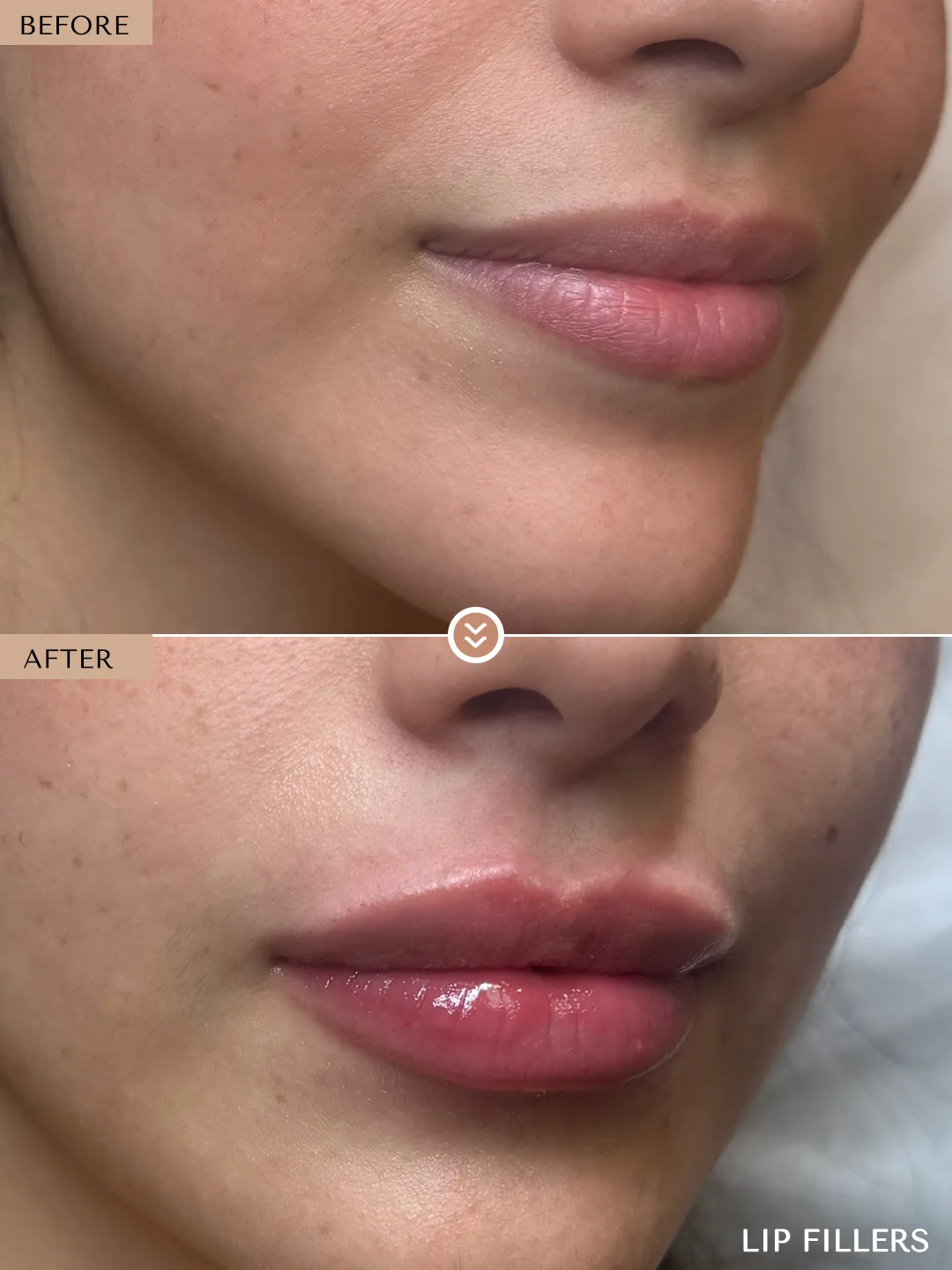
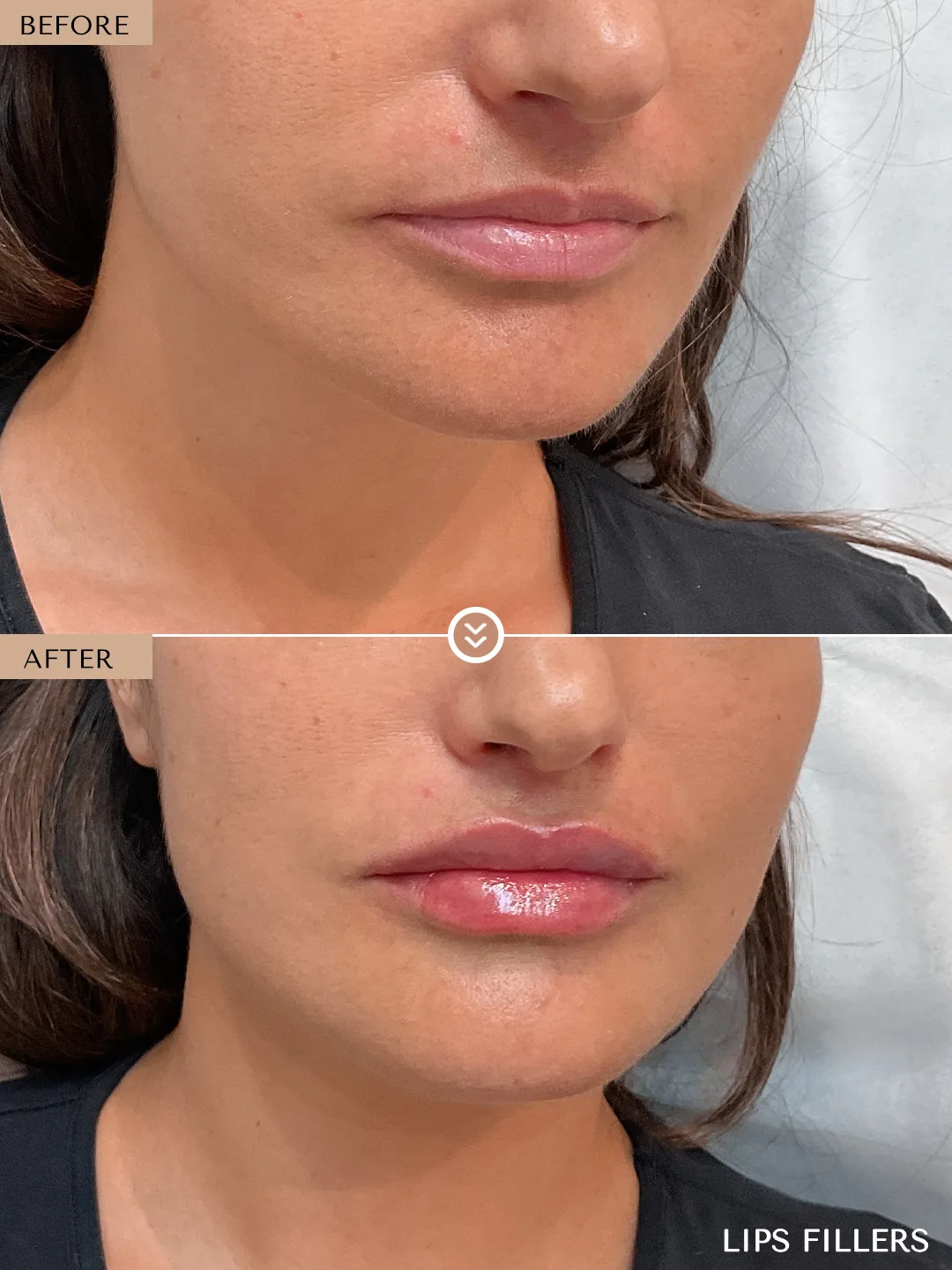
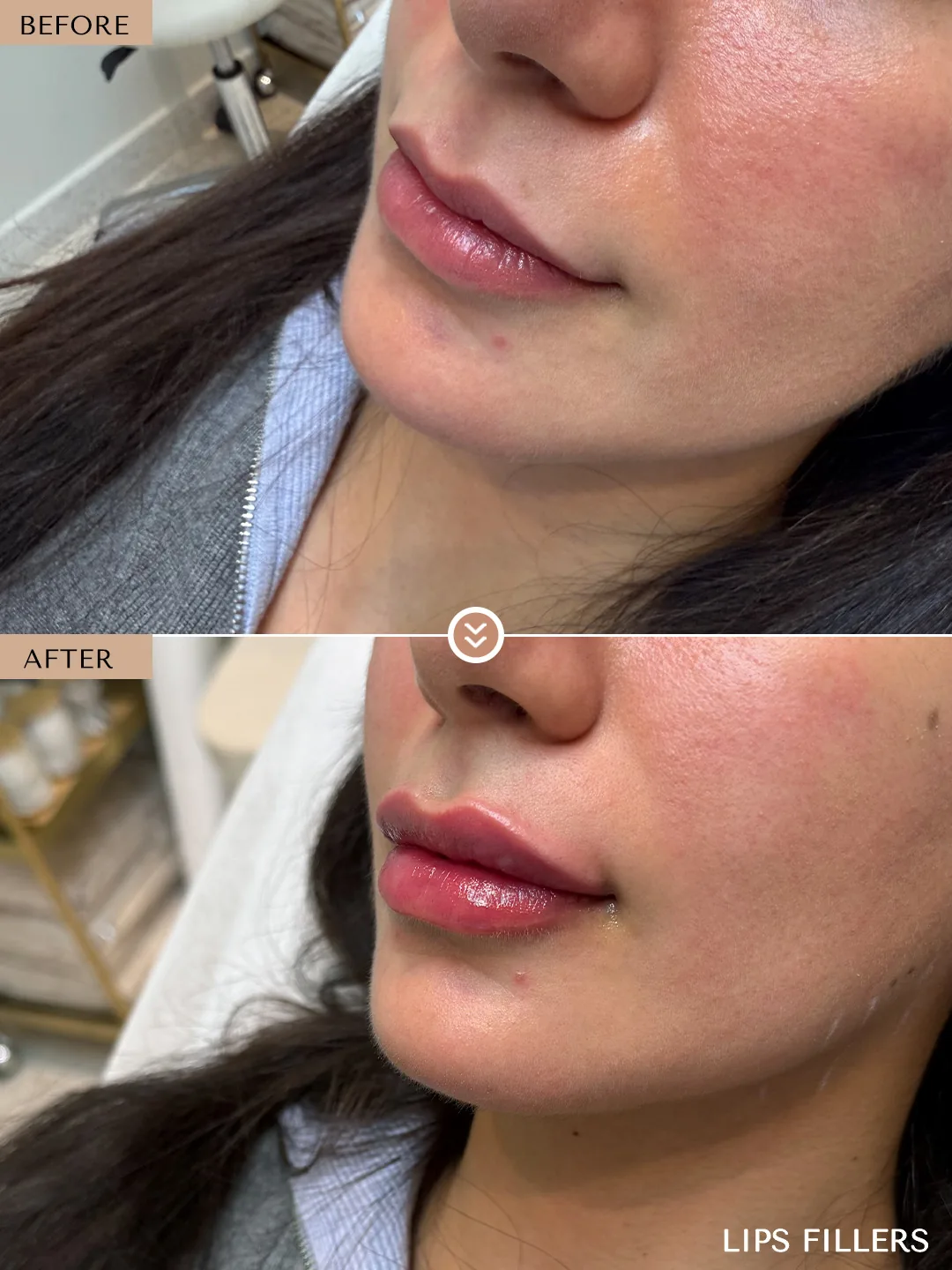
Individual results vary. Photographs are of Dr. Nivine’s own patients, shown with written consent and unretouched.
Planning starts with lip height, projection, tissue capacity, tooth show, smile movement, upper-lip length and previous filler. The endpoint is defined around the natural limits of the tissue rather than a target millilitre amount.